

Sacrifices & Worship: Lessons from Leviticus 1–7
/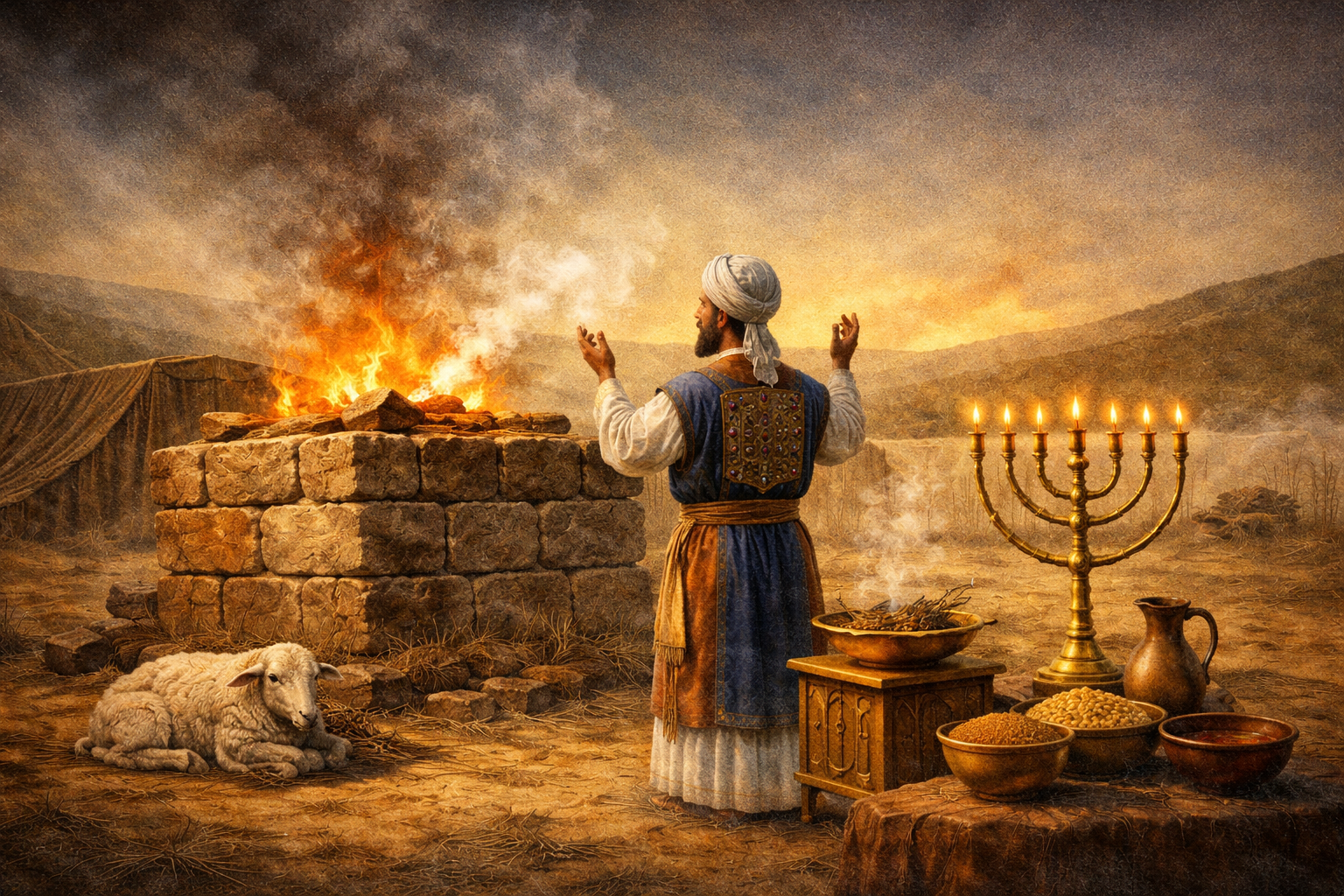
When many Christians come to the book of Leviticus in their Bible reading, they get bogged down by the many details of the ceremonial laws right from the opening few chapters about sacrifices. These laws from a time and culture long past, about sacrifices that are no longer required (Heb 10:1–18),[1] seem irrelevant to the life of the Christian today. Moreover, the vast majority of scholarship on the ceremonial law (and on the Old Testament in general) focuses on its relevance within its own historical context, rather than on its relevance for Christians today. Nevertheless, Tremper Longman III states that “it is vitally important” for Christians “to work at our appreciation and understanding of the Old Testament.”[2] Writing specifically about the book of Leviticus, Michael A. Grisanti asserts that “this book is of fundamental importance to both the OT and the NT.”[3] It behooves the Christian, then, to carefully study the ceremonial laws to understand what God is still teaching us today through them. This article will demonstrate that the sacrifices prescribed in Leviticus 1–7 continue to speak to Christians today about the essence of worship, the preparation for worship, and the foundation for worship. These lessons have important ramifications for how we should worship in our churches today.
Essence of Worship: Gift for God and Fellowship with God
Firstly, the OT sacrifices teach us that the essence of worship is to give a gift pleasing to God and to enjoy fellowship with him. In the words of the Westminster Shorter Catechism, “Man’s chief end is to glorify God, and to enjoy him forever.”[4] These ideas are embodied especially in the grain offering and peace offering but are present in the other sacrifices as well.
Gift for God: Grain, Peace, and Burnt Offerings
Part of the essence of worship is to bring a gift that is pleasing to God. This is the main idea of the grain offering but is part of the purpose of the peace and burnt offerings as well. In Leviticus 1–4, the phrase “a pleasing aroma” is used three times to describe the burnt offering (Lv 1:9, 1:13, 1:17), three times to describe the grain offering (Lv 2:2, 2:9, 2:12), twice to describe the peace offering (Lv 3:5, 3:16), and even once to describe the sin offering (Lv 4:31). Speaking about the burnt offering, Cornelis Van Dam proposes that “by laying his hand on the animal, the Israelite accentuated the fact that he was not just giving this animal to God as a gift, but that he was offering and dedicating himself, his entire being to God as a sacrifice.”[5] Also speaking of the burnt offering, Radmacher, Allen, and House assert that the burning of the whole animal on the altar “symbolizes that the worshiper must hold nothing in reserve when coming to God; everything is consumed in the relationship between God and the sincere worshiper.”[6] The gift that is pleasing to God, then, is not mainly the physical thing being offered. The physical offering merely symbolized the offering of the whole self to God by the worshipper. The offering of self in complete obedience and devotion is the true gift that pleases God (1 Sm 15:22). This is the essence of worship.
Fellowship with God: Peace Offering
The other aspect of the essence of worship is to enjoy fellowship with God. In Leviticus 1–3, the burnt, grain, and peace offerings are called “a food offering” in the ESV: three times for the burnt offering (Lv 1:9, 1:13, 1:17), six times for the grain offering (Lv 2:2, 2:3, 2:9, 2:10, 2:11, 2:16), and six times for the peace offering (Lv 3:3, 3:5, 3:9, 3:11, 3:14, 3:16). The Hebrew word behind “food offering” is אִשֶּׁה (isheh), and there has been some debate about its exact meaning. This is what the Faithlife Study Bible says about the word:
The Hebrew term used here, isheh, is commonly associated with the noun esh, meaning “fire.” This results in the translation of “offering by fire.” However, the meaning of isheh … could be related to cognate terms for “gift” in Arabic ('aṯṯa) and Ugaritic ('iṯṯ). Since the translation “offering by fire” is also difficult to support from the general usage of isheh in the OT, the word most likely refers to some kind of gift and should probably be understood as referring to a food gift or food offering.[7]
Thus, the ESV translation of “food offering” is appropriate. In ancient Near East culture, the sharing of a meal was “often a means of cementing social relationships.”[8] Hence, “food offering” speaks to the fellowship between God and the worshipper. When the worshipper came to the altar to worship, he was not only presenting a gift to a God who sits high above looking down. He was enjoying fellowship with the Creator of the universe who promised to “dwell among the people of Israel and … be their God” (Ex 29:45).
This notion is most clearly demonstrated in the peace offering, which is shared by God (the fat burned on the altar), the priests (the breast and right thigh), and the worshipper (the rest of the animal) (Lv 3, 7:11–21, 7:28–36). It pictures a communal meal enjoyed by God and the priests and the worshipper together. Caio Peres observes well that “the end result for all offerings should be the encounter, communion bonding, and alignment with the glorious and holy divine presence.”[9] This communion was the purpose for which God created man, and which man enjoyed before the fall. This communion—the restoration of the relationship between God and man—was the end goal of atonement. Hence, the true essence of worship is not just to give a gift pleasing to God, but also to enjoy intimate fellowship with God.
Relevance for Christians Today
The essence of worship for the Christian today is the same as it was for the Israelite in the days of Moses. First, worship is about offering up ourselves to God. The apostle Paul exhorts us to “present your bodies as a living sacrifice, holy and acceptable to God, which is your spiritual worship” (Rom 12:1). Hence, worship is more than just attending church or singing songs of praise on Sundays—what many Christians merely mean when they refer to “worship.” It is the offering up of our very selves—our desires, our energy, our time—in full submission to God’s will and commands (Mk 12:29–30). Churches today would do well to focus more on teaching and exhorting believers to offer up the sacrifice of full obedience than on the professional musicianship and production of their worship music.
Second, worship is about coming into God’s presence and enjoying fellowship with him. Allen Ross remarks that “Israel's experience of a communal meal anticipated the Christian meal called Holy Communion. It too would be a celebration by those who were at peace with God, a peace made possible by the sacrificial death of Christ.”[10] When we gather to worship, we are entering into the presence of the holy God who took the initiative to make it possible for us to stand before him without being struck dead, our sin having been dealt with. This realization ought to fill us with awe and gratitude, and our corporate worship ought to be characterized by this sense of awe and gratitude instead of by the latest fads in pop culture. Our current earthly worship also looks forward to the day when we will enjoy full, unhindered, perfect fellowship with the God who “will dwell with them, and they will be his people, and God himself will be with them as their God” (Rv 21:3). What glorious worship that will be, when we finally behold his glory face-to-face, as we are presented before him “holy and blameless and above reproach” (Col 1:22)!
Preparation for Worship: Confession and Restitution
Secondly, entering into the presence of the holy God requires careful preparation of the heart. The OT sacrifices teach us that preparation for worship requires confession and restitution. These are embodied in the sin and guilt offerings respectively. I will examine each in turn.
Confession: Sin Offering
The sin offering teaches that preparation for worship requires confession of sin.[11] As the Israelite came into God’s presence to worship, he needed to confess any specific sin that was made known to him, and to bring a sin offering to God. After listing some possible specific sins, Leviticus 5 says that when the sinner “realizes his guilt in any of these and confesses the sin he has committed, he shall bring to the LORD as his compensation for the sin that he has committed, … a sin offering. … and he shall be forgiven” (Lv 5:5–10). Thus, the purpose of the sin offering was to confess sin and receive forgiveness. A cursory study of Scripture reveals two illustrations of how the sin offering was required as preparation for worship.
First, the sin offering (together with the burnt offering) was always offered before the grain and peace offerings whenever they are mentioned together at the same occasion. Leviticus 9 records the first time Aaron and his sons take up their duties to offer sacrifices after their consecration as priests. Aaron first offered the sin offering and burnt offering for himself (vv. 8–14), then afterwards the sin offering and burnt offering for the people (vv. 15–16), and then finally the grain offering and peace offering (vv. 17–21). Another example is the stipulations for the Nazirite when he completed the time of his vow. He was to bring “one male lamb … for a burnt offering, and one ewe lamb … as a sin offering, and one ram … as a peace offering, and … their grain offering and their drink offerings” (Nm 6:14–15). In both examples, the sin offering (symbolizing confession of sins) and burnt offering (symbolizing atonement) had to be offered first, before the grain offering (symbolizing thanksgiving) and peace offering (symbolizing fellowship with God) could be offered. The worshipper needed to prepare his heart by confessing sin, and have his sin atoned for, before he was able to worship with thanksgiving and enjoy fellowship with God.
Second, no oil or frankincense were allowed with the sin offering. Leviticus 5 prescribes three possible versions of the sin offering for an individual Israelite who sins, depending on his financial ability. Those who cannot afford a lamb or two turtledoves or pigeons could offer “a tenth of an ephah of fine flour,” but “shall put no oil on it and shall put no frankincense on it, for it is a sin offering” (Lv 5:11). Carl Friedrich Keil and Franz Delitzsch offer this explanation:
But it was to be offered without oil and incense, because it was a sin-offering, that is to say, “because it was not to have the character of a minchah” (Oehler). But the reason why it was not to have this character was, that only those who were in a state of grace could offer a minchah, and not a man who had fallen from grace through sin. As such a man could not offer to the Lord the fruits of the Spirit of God and of prayer, he was not allowed to add oil and incense, as symbols of the Spirit and praise of God, to the sacrifice with which he sought the forgiveness of sin.[12]
In other words, one who would approach God in worship first needed to prepare his heart by confessing sin and receiving forgiveness, before he could be free to offer a gift to God.
Restitution: Guilt Offering
The guilt offering teaches that preparation for worship also requires making restitution for wrongs done. In the stipulations for the guilt offering in Leviticus 5–6, the idea of compensation or restoration is emphasized. Whenever possible, the one who realized that he had sinned against his neighbor in a material way must make things right by restoring what rightfully belonged to his neighbor and adding a fifth to it. If his sin was against God, he had to make the payment to the priest. Only after making restitution could he bring his guilt offering, so that “the priest shall make atonement for him” (Lv 5:16, 5:18, 6:7). As Ross remarks, “Confessing a sin, even with the appearance of contrition, without attempting to make things right when they could be set right was, and is, a sham.”[13] Preparation for worship required both confession and restitution—outward signs of true repentance.
Relevance for Christians Today
What was required for the Israelite in preparation for worship is still applicable to the Christian today. The apostle John exhorts us to “confess our sins” (1 Jn 1:9), and Jesus himself taught that we are to make things right with anyone who “has something against” us before coming before God to worship (Mt 5:23–24). In the seeker-sensitive church culture today where much focus is placed on being welcoming and not offending anyone, churches need to emphasize instead the preparation of the believer’s heart at the beginning of our worship services by encouraging worshippers to search their own hearts for sins that need confessing and wrongs that need to be made right. One practice that New West Community Church in New Westminster, BC, Canada has started is to include a reading of the law—a passage of Scripture that denounces sin or instructs on godly living—near the beginning of service every Sunday.[14] This reading is followed by a prayer led by one of the church leaders confessing sin and giving thanks for the atoning sacrifice of Christ and the power of the Holy Spirit to overcome sin. Sometimes the prayer is preceded by a moment of silence for worshippers to search their own hearts and ask the Holy Spirit to reveal any sins that need to be confessed. This practice was born out of the conviction that pure worship requires preparation of the heart to deal with sin beforehand.
Foundation for Worship: Atonement by Shed Blood
Thirdly, confession and restitution would have no effect for our standing before God without the atonement that God graciously provided. The OT sacrifices teach us that the foundation of our worship is atonement by shed blood. R. Laird Harris says this about atonement:
The verb is always used in connection with the removal of sin or defilement, except for Gen 32:20; Prov 16:14; and Isa 28:18 where the related meaning of “appease by a gift” may be observed. It seems clear that this word aptly illustrates the theology of reconciliation in the OT. The life of the sacrificial animal specifically symbolized by its blood was required in exchange for the life of the worshipper. Sacrifice of animals in OT theology was not merely an expression of thanks to the deity by a cattleraising people. It was the symbolic expression of innocent life given for guilty life.[15]
Atonement, then, is the removal of the sin of the worshipper so that he could stand before God. Without atonement, no worship would be possible because the sinful worshipper would be struck dead as soon as he tried to enter the presence of the holy God (Lv 16:2, 16:11–13; Ps 24:3–4). Atonement is the foundation on which the worshipper stands as he confesses his sins before God. The idea of atonement is most prominent in the burnt offering (Lv 1:4), and is also one of the ideas behind the sin and guilt offerings (Lv 4:20, 5:16).
Atonement: Burnt Offering
In the burnt offering, atonement was symbolized by the laying of the worshipper’s hand on the head of the animal, the killing of the animal, the throwing of the animal’s blood against the sides of the altar, and the burning of the whole animal on the altar. Ross observes that the burnt offering “signified that the worshipper had surrendered his or her life to God and that God had completely accepted the worshipper. In other words, any barrier that had existed was removed—there was full atonement.”[16] The worshipper was enabled to stand before God in worship because his sin had been covered over, atoned for.
Moreover, this atonement was made possible by God’s initiative. God was the one who prescribed the sacrifices and graciously offered atonement to those who obeyed in faith. As P. M. Venter noted about the OT atonement rituals, “All of these measures were based on Yahweh’s willingness to forgive and to be reconciled with his people.”[17] The sacrifices and rituals themselves had no inherent cleansing effect apart from the fact that God commanded and promised that those who worshipped in this way in faith would receive atonement for their sin (Heb 10:4). Walter C. Kaiser Jr. concludes that “the efficacy of the OT sacrifices, then, rested in the Word of God, who boldly announced that sacrifices done in this manner and with this heart attitude … would receive from God a genuine experience of full forgiveness.”[18]
The fact that atonement was the foundation for Israelite worship is also seen from the prominence of the burnt offering in the ceremonial laws. Van Dam states that out of all the sacrifices in Mosaic law, the burnt offering “was the one most frequently offered.”[19] He then lists nine different types of occasions where the burnt offering was to be offered according to the law, and he concludes that “the burnt offering permeated the life of Israel. Life could not be imagined without it.”[20] He goes on to claim, however, that even though “the idea of atonement is there”, it is “not the central or dominant aspect of the whole burnt offering.” Instead, “the basic idea of sacrifice is … a gift to God.”[21] The validity of this claim is beyond the scope of this paper, and I have already examined the notion of offering a gift to God as part of the essence of worship; but the fact remains that atonement is a significant part of the purpose of the burnt offering (Lv 1:4). The prominence of the burnt offering, including the requirement to offer it daily in the morning and evening (Ex 29:38–42; Nm 28:1–8), demonstrates that atonement is the foundation for worship.
Additionally, the location of the altar at “the entrance of the tent of meeting” (Lv 1:3) also demonstrates that atonement was required before the Israelites could come before God in worship.[22] Figuratively, the sacrifice (and the atonement it represented) was the gate through which the worshipper walked into the presence of God. Just as all travelers at an airport are required to go through the security checkpoint before boarding a plane, all worshippers were required to have their sins atoned for at the altar before entering the presence of God at the tent of meeting. No other way was possible.
Relevance for Christians Today
Atonement is still the foundation for Christian worship today, just as it was for the Israelites back then. The burnt offering pointed forward to the ultimate sacrifice of Christ (Heb 9)—“no one can draw near to God in worship apart from the blood atonement” accomplished by his sacrifice.[23] Jesus is the gate through which we must walk in order to have access to God to worship (Jn 10:9; Heb 10:19–20). No other way is possible (Acts 4:12). Like the OT sacrifices, this atonement was also made possible by God’s initiative alone (Rom 5:8). He sent the Son and graciously offers atonement to all who would put their faith in him (Jn 1:12). The atoning sacrifice of the shed blood of Jesus is truly the foundation on which we stand before the holy God in worship. Churches today need to have a clear conviction that worship is only possible for those who have put their faith in the atoning sacrifice of Christ. Although true worship should have the effect of drawing nonbelievers in attendance toward God, worship services should not be tailored toward attracting the nonbeliever. As important as evangelism and outreach are, they should not be the main goals of the worship service. This does not mean, for example, that the message should never include a call for the nonbeliever to repent and put their trust in Christ. However, the primary focus should be to help the saint to enter the presence of God in worship.
Conclusion
When the worshipper comes before God, standing on the foundation of the atonement offered by God and having prepared his heart in confession and restitution, he is enabled to offer a gift that is pleasing to God and to enjoy intimate fellowship with God. This is the essence of worship that God taught the Israelites by the way he designed the sacrifices, and that he continues to teach us today through those same sacrifices recorded in Scripture. In light of this truth, churches need to cultivate godly worship by constantly reminding worshippers of the centrality of the atonement of Christ, without which there can be no worship. Churches also need to encourage the right preparation of the heart of believers as they come to worship, and to encourage the fitting response of offering the whole self to God in submission. All elements of the worship service, from the ambiance to the order of service to the choice of music to the message, should be designed with these goals in mind. Then our worship can be a beautiful foretaste of the eternal worship that awaits us when we will enjoy the sweet fellowship of his presence forever. Come, Lord Jesus!
[1] All Scripture citations in this work are taken from The Holy Bible: English Standard Version (Wheaton: Crossway Bibles, 2016) unless otherwise noted.
[2] Tremper Longman III, Making Sense of the Old Testament: Three Crucial Questions (Grand Rapids, MI: Baker Books, 1998), 11.
[3] Michael A. Grisanti, “The Book of Leviticus,” in The World and the Word: An Introduction to the Old Testament (Nashville, TN: B&H Publishing, 2011), 217.
[4] The Westminster Confession of Faith: Edinburgh Edition (Philadelphia: William S. Young, 1851), 387.
[5] Cornelis Van Dam, “The Burnt Offering in Its Biblical Context,” Mid-America Journal of Theology 7, no. 2 (1991): 202, accessed March 22, 2024, https://www.midamerica.edu/uploads/files/pdf/journal/02vandamjournal72.pdf.
[6] Earl D. Radmacher, Ronald B. Allen, and H. Wayne House, eds., Nelson’s New Illustrated Bible Commentary (Nashville, TN: Thomas Nelson, 1999), 153.
[7] John D. Barry, ed., Faithlife Study Bible (Bellingham, WA: Lexham Press, 2016), Lv 1:9n.
[8] Werner E. Lemke, “Food,” in The HarperCollins Bible Dictionary (Revised and Updated), ed. Mark Allan Powell (New York: HarperCollins, 2011), 294.
[9] Caio Peres, “Bloodless ‘Atonement’: An Exegetical, Ritual, and Theological Analysis of Leviticus 5:11-13,” Journal of Hebrew Scriptures 20 (2021): 35, https://doi.org/10.5508/jhs29566.
[10] Allen Ross, Recalling the Hope of Glory: Biblical Worship from the Garden to the New Creation (Grand Rapids, MI: Kregel Publications, 2006), Kindle Locations 1708–1709 of 7214.
[11] Ross, Kindle Locations 1935–1936 of 7214.
[12] Carl Friedrich Keil and Franz Delitzsch, Commentary on the Old Testament (Peabody, MA: Hendrickson, 1996), 1:529.
[13] Ross, Recalling the Hope of Glory, Kindle Location 1943 of 7214.
[14] This is from the author’s personal experience as a member of this church.
[15] R. Laird Harris, “1023 כָפַר,” in Theological Wordbook of the Old Testament, ed. R. Laird Harris, Gleason L. Archer Jr., and Bruce K. Waltke (Chicago: Moody Press, 1999), 453.
[16] Ross, Recalling the Hope of Glory, Kindle Locations 1947–1948 of 7214.
[17] P. M. Venter, “Atonement through Blood in Leviticus,” Verbum et Ecclesia 26, no. 1 (2005): 280, https://doi.org/10.4102/ve.v26i1.224.
[18] Walter C. Kaiser Jr., Toward Rediscovering the Old Testament (Grand Rapids, MI: Academie Books, 1987), 134–135.
[19] Van Dam, “The Burnt Offering in Its Biblical Context,” 196.
[20] Van Dam, 197.
[21] Van Dam, 198.
[22] Radmacher, Allen, and House, Nelson’s New Illustrated Bible Commentary, 153.
[23] Ross, Recalling the Hope of Glory, Kindle Location 1954 of 7214.