

John Piper's A Peculiar Glory: A Review
/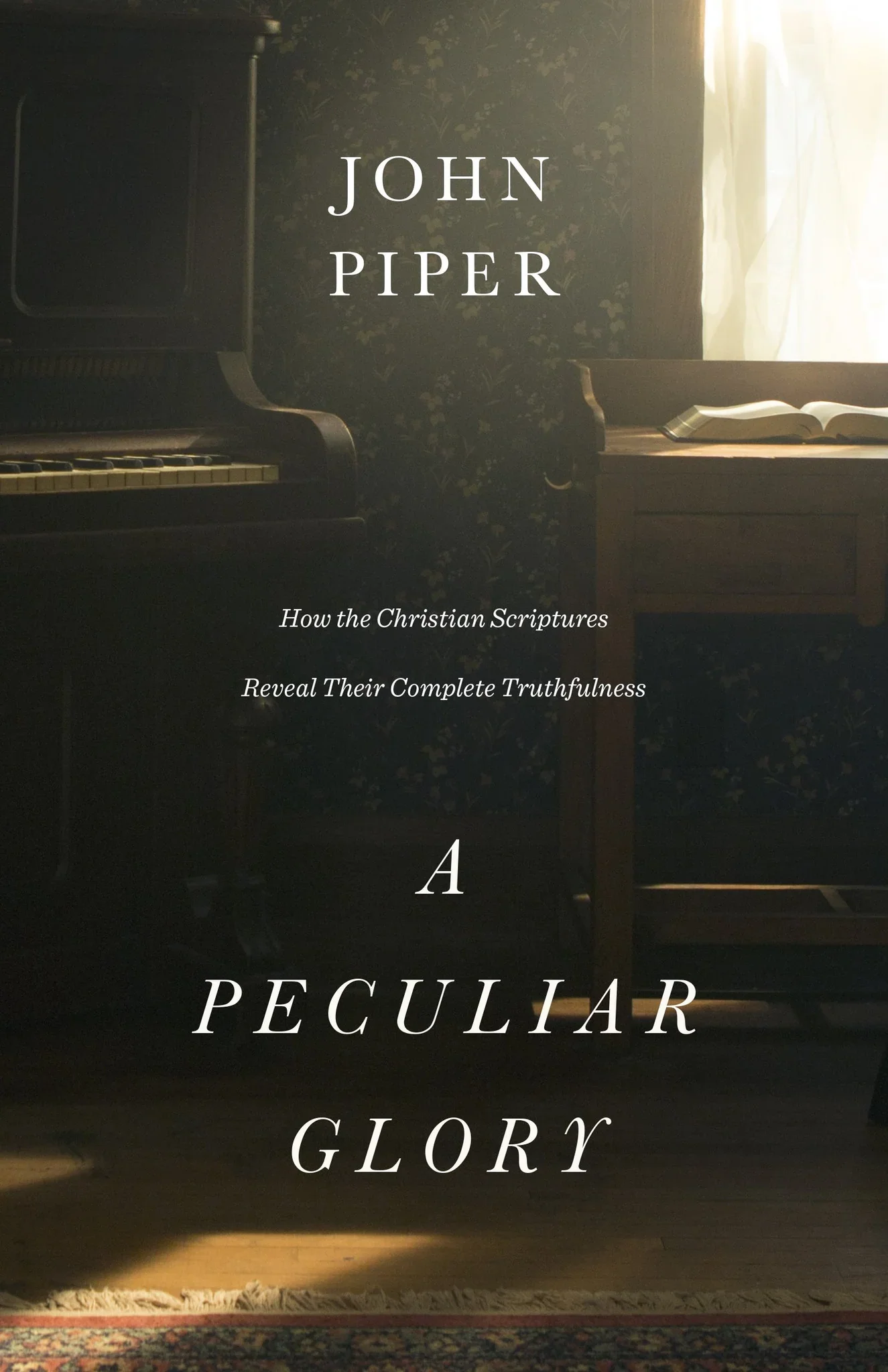
A graduate of Wheaton College and the University of Munich, John Piper has given decades of his life to reading, studying, and teaching the Bible. Piper served as the preaching pastor at Bethlehem Baptist Church in Minneapolis, Minnesota, for thirty-three years before retiring in 2013. In addition to pastoring, Piper has notably served the body of Christ through preaching, his Ask Pastor John podcast, and his many books, articles, and other written contributions. Of all his theological contributions, Piper’s greatest contribution has been his thoughts on Christian hedonism, helping Christians more thoroughly desire and enjoy God so that their lives may bring him glory. At the center of Piper’s quest to help believers love and enjoy Jesus Christ has been his appeal for them to take the Bible seriously and to see the glory of God in the pages of Scripture. A Peculiar Glory is Piper’s attempt to show how the Christian Scriptures reveal the glory of God in truth and that believers see this glory as the Spirit gives them the grace to see it. In his endorsement of the book, John Frame says, “Perhaps only Piper could have written this book.” While this is personally anecdotal, anyone familiar with Piper’s ministry understands exactly what Frame means. The central concerns of this book have been Piper’s central concerns for decades.
Summary
The most important question in the universe is whether or not the Christian Scriptures are true. Of course, answering this question requires much more than going with one’s gut, relying on probability, or even following reason and logic. In A Peculiar Glory, Piper claims from the very outset that “the Bible is completely true” (11). In the introduction and part 1, Piper describes his own experience with the Bible. In seeing the “moral and spiritual beauty in Jesus Christ,” Piper declares that he believes the Bible is true and cannot deny what he has seen (24). He then traces his experience with believing in the Bible’s truthfulness through his academic career, where he often encountered students and professors who did not share his view of the Bible (25). However, upon reflection of his upbringing and education, Piper confesses that “it felt more like my view of the Bible was holding onto to me” rather than vice versa (25).
At the end of part 1, however, he asks the question this way: “Is the Bible God’s Word” (36). After bringing the readers into his own experience of “seeing” the glory of God in the Bible, Piper prepares his readers for what he considers to be the greatest quest one can take, namely, that of answering these questions: “Is the Bible God’s word? Are the Christian Scriptures True. How do we know?” (36). Asking whether the Bible is God’s Word and whether the Christian Scriptures are true is essentially the same question; however, the question presupposes all sorts of other questions. For example, in seeking to know whether or not the Bible is God’s Word, one must necessarily ask “which books make up the Bible?” and “why did some make Bible and others not?” These questions are the great concern of part 2.
In part 2, Piper argues that just as the Old Testament canon was viewed as the authoritative Word of God, the New Testament also bears the same stamp of divine authorship and authority. The foundation for this divine authority of the NT is the Lord Jesus himself, as Piper says, “What opened the way to a new canon of authoritative writings was not the arrival of a new spokesmen for God, who would be called apostles, but rather the arrival of God himself” (53). Jesus is not like other notable teachers of ethics but is the Lord of Glory himself and the judge of the universe (55). Because Jesus is the Son of God, to whom the Father has given all authority, everything Jesus says is absolutely authoritative and binding on all men, including his claims that salvation is in him alone (56). Along the same lines, Piper argues that the apostle’s words are equally authoritative because the apostles are hand-selected and sent out by Jesus himself (57). The Lord’s promise of the Holy Spirit’s presence in their lives in John 14 and 16 shows that their preaching and writing would be on the level of canonical Scripture (58). While Paul was not one of the original twelve, Piper argues that the legitimacy of his apostleship is “accepted and affirmed by the Twelve” (59). Piper concludes chapter 3 by demonstrating how the NT books came to be canonized by the early church and how the NT “grew organically out of the appearance of a new authority in the world” (67).
Chapter 4 is the most technical chapter of the book. Piper argues for a conservative view of inerrancy, claiming the very words of the biblical writers are inspired (74). He goes on to argue that although we do not possess the original autographs, surviving manuscripts are inerrant “to the degree that they faithfully render the divine meaning” of the original manuscripts (78). For Piper, while rigorous historical study and textual criticism are important work, the question of whether the Bible is the authoritative Word of God cannot be proven “decisively on the basis of historical arguments” (79). Parts 3,4, and 5 argue how the Bible comes to be seen and trusted by Christians as the Word of God.
After giving his personal story of being convinced of the glory of God in Scripture and after briefly interacting with the relevant historical and textual data, Piper turns his attention away from the external evidences that prove the Scriptures to be true and focuses on how the Christian Scriptures validate themselves. He argues that the OT people of God understand that God spoke to them through authorized people (94). For Piper, this reality is both obvious and incredible (94). Not only would revelation be spoken by the mouths of prophets, but God also intends his revelation to be written down and recorded (94-95). While Piper calls attention to the fact that the OT bears witness about its own divine authority, he additionally takes great pains to demonstrate Jesus’s view of the OT (99-113). Since Jesus is the Lord of Glory and the very Son of God whose Word is absolutely authoritative, then it follows logically that whatever Jesus’s view of the OT must be the church’s also. Interacting with various passages from the Gospels, Piper shows that Jesus has the highest possible view of the OT. Jesus believes the Hebrew Scriptures, which Piper demonstrates in chapter 2, are the same books that make up the protestant OT, are the divine Words of God. Jesus’s “estimate of this Old Testament is supreme” (112). The conclusion is that the Lord himself authenticates the OT Scriptures. Although Jesus had the highest possible view of the OT, in his incarnation he became “a new and absolutely unique and supreme authority in the world” (117). In the same way Jesus spoke the very words of God, he commissions the apostles, including the Apostle Paul, to speak on his behalf, carried along by the Holy Spirit (118-124).
Parts 4 and 5 are the ultimate thrust of Piper’s thesis. Interacting with the likes of Jonathan Edwards and John Calvin, Piper labors to show that while historical reasoning is ultimately unreliable, the Scriptures reveal their glory by showing forth the glory of God in the hearts of God’s people (140-141). The light of the gospel which the Scriptures shine forth demonstrate their trustworthiness (158). Sinners cannot see the light because they hate it (164), yet those who have been enlightened by the Spirit come to truth in the Scriptures as the Word of God. The true people of God, the church, bear witness to the truth of the Scriptures as they reveal the glory of God, and they reject those books that do not reveal this divine glory. Before concluding, Piper argues that glimpses of God’s glory are seen in a peculiar way through Christ’s “majesty in meekness” (211-226), through fulfillment in prophecy (229-237), through the miracles of Jesus (239-250), and through the lives of those who have been transformed by the gospel. (253-265). Piper ends the book by giving historical reasoning and apologetics their place and concludes by reaffirming his position that the Christian Scriptures are the very divine Word of God.
Evaluation
The main concern of A Peculiar Glory is to show that the Bible is not an ordinary book that contains some worthwhile ethical considerations. Rather, the Bible is what it claims to be: the divine words of God. Since the Scriptures are the divine words of God, they are absolutely authoritative and truthful. Piper successfully argues his thesis that the Christian Scriptures reveal their absolute truthfulness. The strength of this work is not its attention to historical detail or technical textual data; there are books that take up these issues in much more detail. However, Piper confesses that his purpose is not to prove the legitimacy of the Scriptures from historical reasoning (79). He argues that the Bible’s truthfulness must be able to be seen by “ordinary people, with little chance of following complex and obscure textual and historical arguments” (79). Thus, this book may not be the best option for a liberal higher critical scholar who is interested in textual criticism (or perhaps it would be, depending on the way one looked at it). The more technical sections of the book seem to be short synopses of the conclusions drawn by scholars who interact much more extensively in historical textual criticism. While, again, Piper’s concern is to show how the Scriptures demonstrate their own glory, readers interacting with the Scriptures at more technical levels may find this work wanting in some respects.
Piper’s authorship of A Peculiar Glory is obvious to those familiar with his preaching and writing. Piperian themes such “seeing and savoring the glory of God in Christ,” are all over this book. Perhaps the most effective section of the book is part 3 wherein Piper demonstrates that the Bible’s claim about itself is that it is the very divine Word of God. Piper demonstrates decisively that Jesus has the most supreme view of the OT one could have. By showing that Jesus himself believes that the Scriptures were more worthy of trust than even the resurrection from the dead (Luke 16:31), Piper demonstrates that his view of how the Bible’s glory is seen, and thus the book’s thesis, is agreeable with Jesus’s view of how the Bible’s glory is seen (108). The NT is full of stories demonstrating the miracles themselves do not make believers out of people if their hearts are blinded to the glory of God (108). Until the blindness is removed, neither miracles nor Scripture will convince sinners of the glory of Christ: “One may read the Scripture and see a miracle and not see the glory of God. Seeing the glory of God in the word of God or in the work of God is a gift of God” (108). This line of thought sets Piper up to argue that the Spirit’s work of illumination coincides with one’s belief in the Bible’s truthfulness.
Another remarkably convincing chapter comes in chapter 8: “A Shared Concern with Jonathan Edwards” (127-148). This chapter is the heart of the book. Piper again shares his concern with basing one’s confidence in the Scriptures on historical reasoning, and he cites the same concern that his hero, Jonathan Edwards, had concerning the Mahometan Indians’ conviction of the gospel (134-135). For Piper, saving faith must not be a leap in the dark or an ascribing to historical facts, but must be well-grounded confidence in God, as he says, “Beauty, excellency, perfection, amiableness [loveliness], divinity, holiness – these are the qualities of the gospel of which saving faith must be certain. Not just historical facts or doctrinal propositions” (137).
If Piper’s goal is to help the ordinary layperson have this well-grounded confidence in his or her Bible, he succeeds in A Peculiar Glory. One does not need to be intellectually astute, theologically trained, or historically privy to see the glory of God in the Word: “There is a difference between mere intellectual knowledge and knowledge that is rooted in the God-given spiritual sight of divine glory that is really there” (139). Piper’s exposition of 2 Corinthians 4:3-6 is as illuminating as any. Piper shows the parallelism of the verses, arguing that Paul’s concern is that his readers see that the “glory of Christ and the glory of God are one glory” (141). Though “Christ is the image of God, and God’s glory shines in the face of Christ” (141), the Scriptures are the divine writings that reveal this glory to the hearts to those who have been given the gift of seeing. Thus, when a person believes the gospel and believes the Scriptures to be the Word of God, it is not because they have made the determination to believe in one religion over another. Rather, it is because they have seen genuine glory revealed in the face of Christ through the pages of Scriptures (141-142).
Perhaps the biggest scruple one might have with A Peculiar Glory is Piper’s choice of themes he believes peculiarly display God’s glory. Ministers should be wary of arguing that any of God’s works or attributes “most” display his glory. Orthodox Christians believe that God is “simple” meaning that his being is not a composite of many attributes, but that he is One (Deut. 6:4). Heterodoxy often begins when ministers insist that certain attributes of God, or certain works of God, are more central to his being than others or display his glory more than others. Some may accuse Piper of this when he says, “Close to the heart of what makes the glory of God glorious is the way his majesty and meekness combine” (217). This statement is true; however, one could just as easily argue that the glory of God is glorious because of his wrath against sinners or because of his providential love for people who hate him or some other doctrinal theme. Piper attempts to show that God’s glory is peculiarly shone through God’s majesty in meekness (211-226), through fulfillment in prophecy (229-237), through the miracles of Jesus (239-250), and through the lives of those who have been transformed by the gospel. (253-265). Again, Piper is correct in that all of these categories do reveal God’s glory. However, one could just as easily expound on how four other biblical themes that reveal the glory of God as well. Though this section by no means weakens Piper’s argument, readers should be cautious of over-extending the idea that God’s glory is “peculiarly” seen in some biblical themes more than others.
Conclusion
A Peculiar Glory is an excellent resource for any Christian to read to strengthen his or her confidence in the Bible as the Word of God. Though scholars working in the field of textual criticism may find this book lacking, Piper’s intention is not to provide the reader with a confidence based on historical evidence or textual data. Rather, his burden is to show ordinary Christians, despite their academic achievements, that they can and must have a well-grounded confidence in the Scriptures as the Word of God. This grounding comes from the Holy Spirit’s illuminating power in the work of the Christian, who, as a result of God’s gracious gift, sees the glory of God in Christ revealed in the Protestant Scriptures. Though some may scruple with the categories Piper focuses on as showing a “peculiar glory,” these categories demonstrate that the God of the Bible does show forth his glory in unique and incredible ways that are unmatched in any other religious text. In A Peculiar Glory, Piper sets out to answer whether Christian Scriptures are the Word of God and how they show themselves to be so, and, in my estimation, his answers are satisfactorily biblical and edifying.